
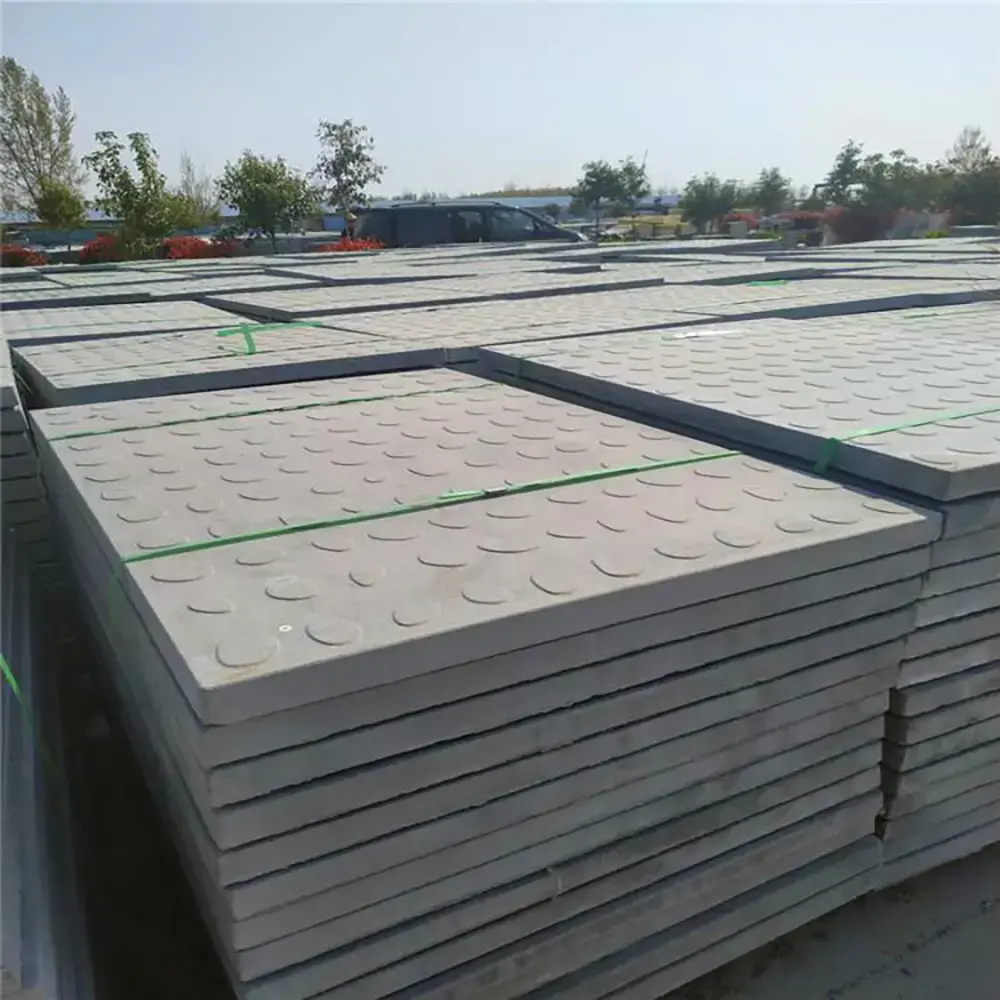
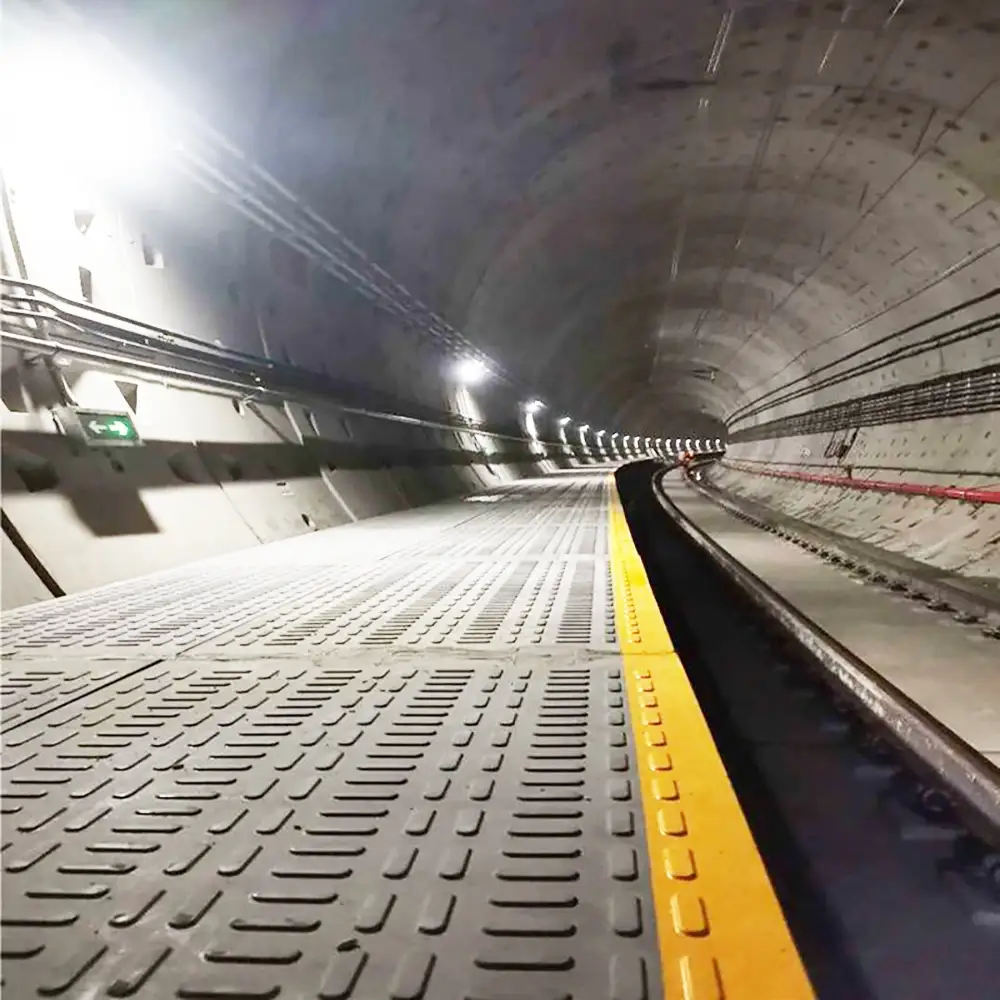
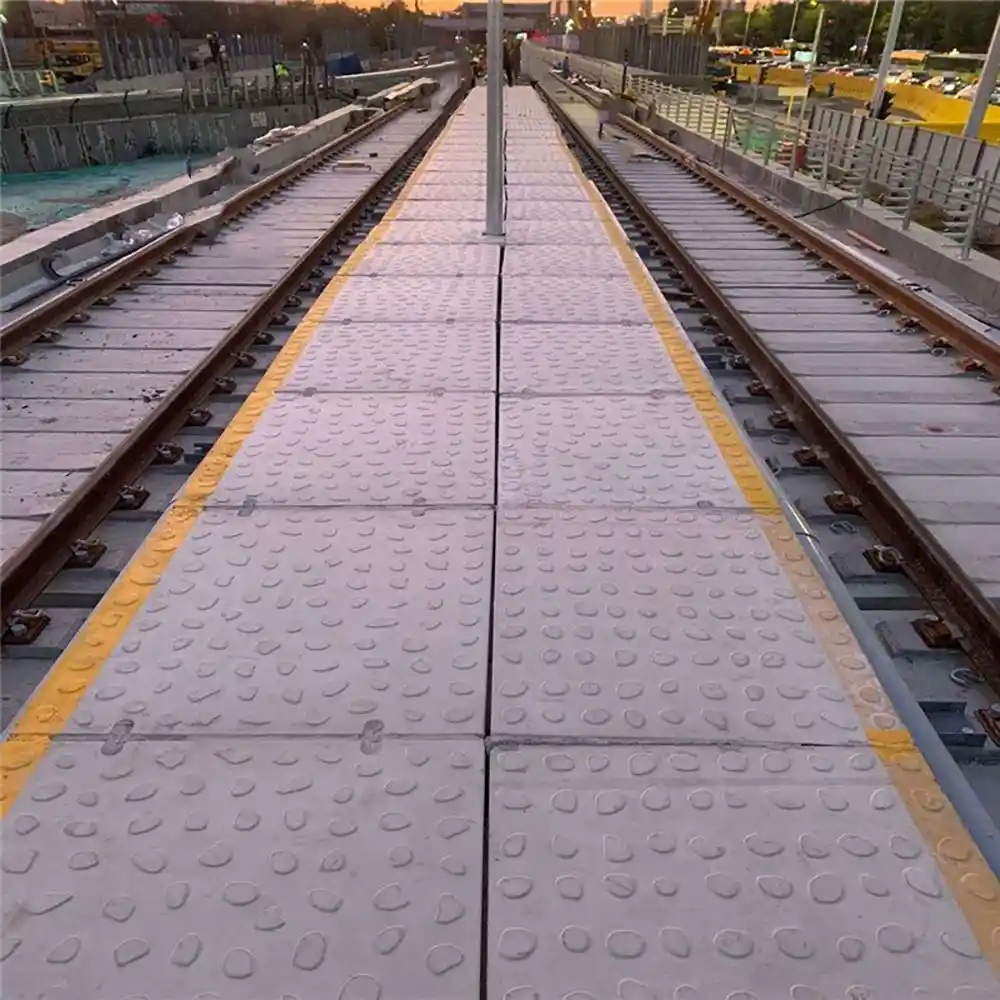
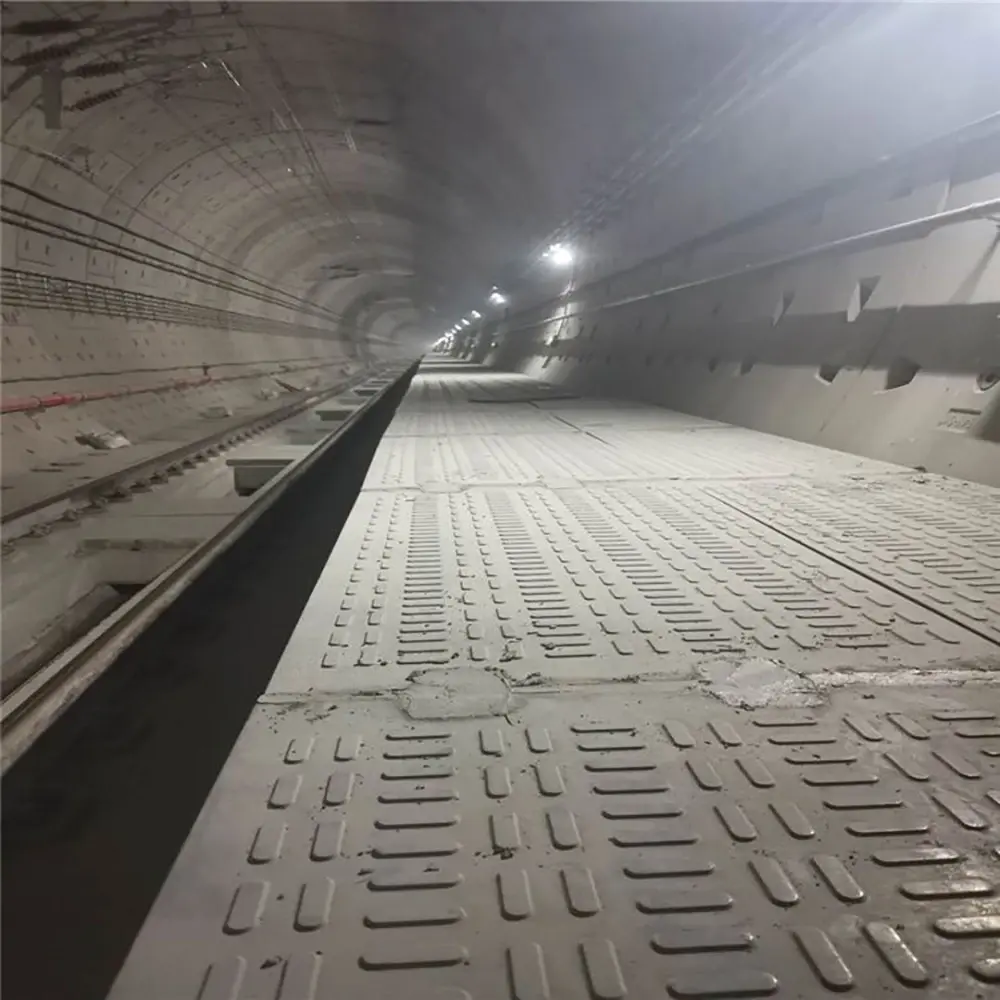

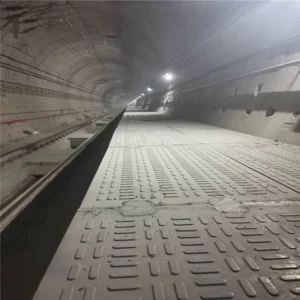
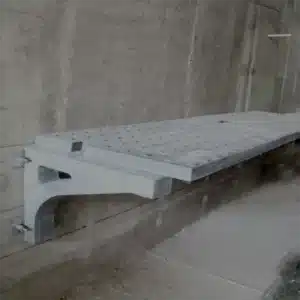
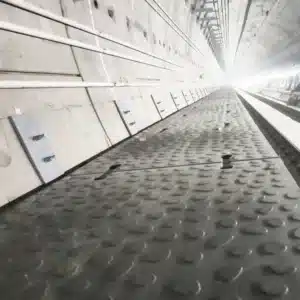
RPC Evacuation Platform
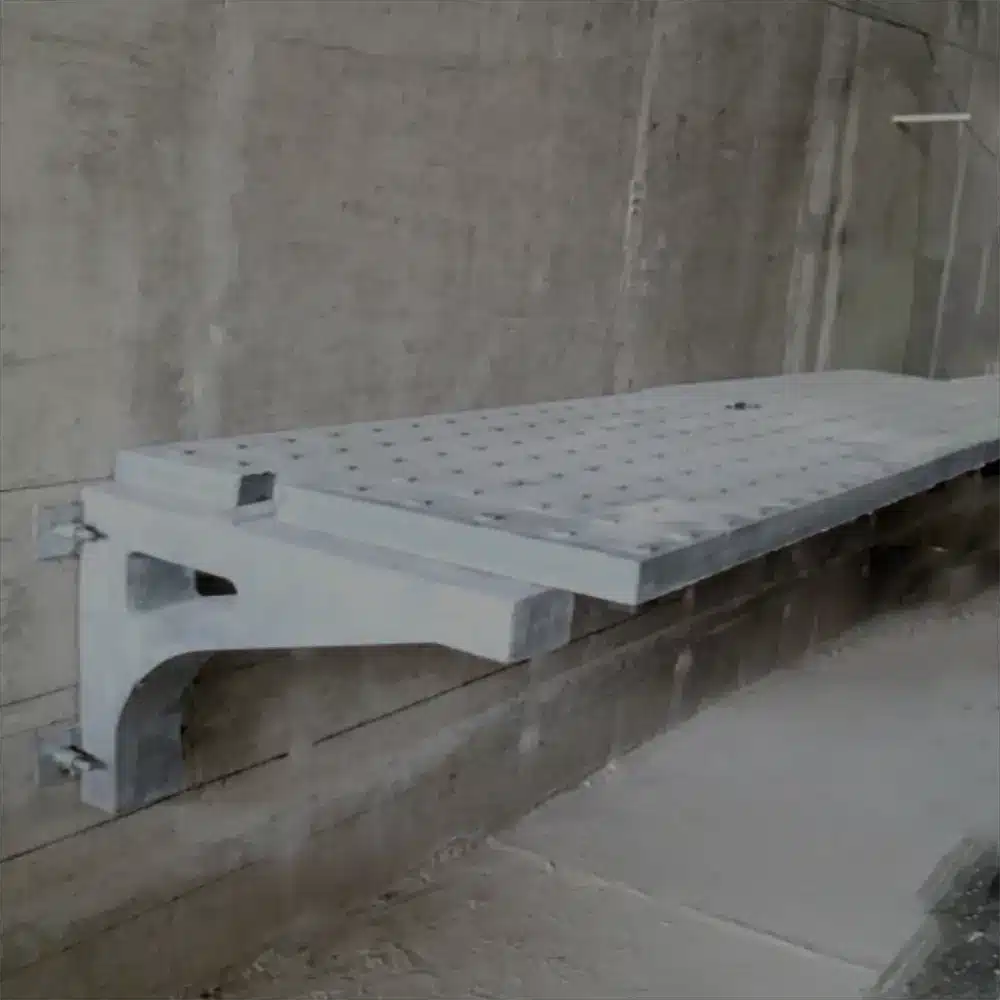
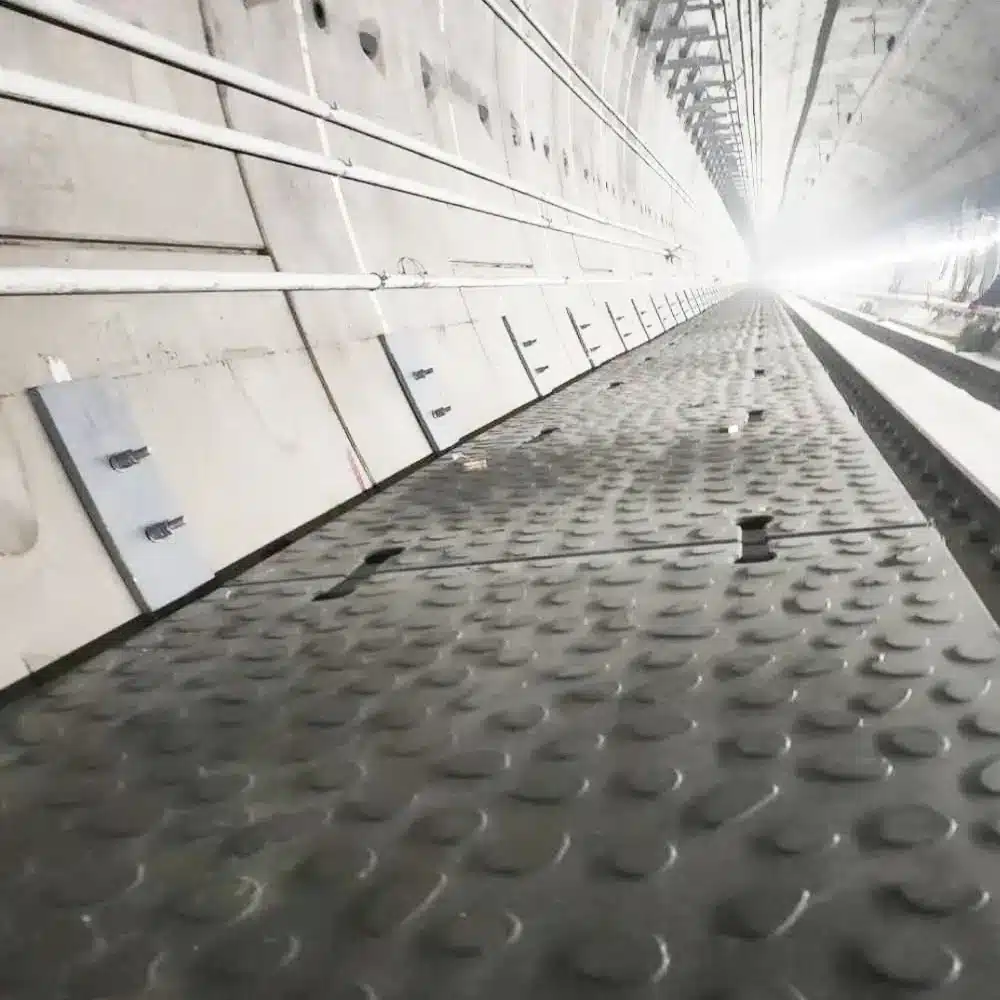
It integrates the superior properties of RPC material and the structural advantages of prefabricated cover slabs, and has the following core characteristics:
RPC plate characteristics:
Ultra-high strength and durabilityIts compressive strength can reach 120–200 MPa, much higher than that of traditional concrete. It has excellent resistance to corrosion, abrasion and freeze-thaw cycles, and is suitable for harsh working environments.
Lightweight and thin structureCompared with ordinary concrete cover slabs of the same bearing capacity, RPC cover slabs are thinner and lighter, which reduces the overall load of the project and simplifies transportation and installation.
Good crack resistance and impermeabilityThe dense internal structure of RPC effectively prevents the penetration of water, chemical media and other substances, avoiding the corrosion of internal steel bars (if any) and extending the service life.
Wide application scenariosIt is widely used in transportation engineering (such as railway tunnel cable trough covers, highway bridge deck drainage covers), municipal engineering (underground pipe gallery covers, manhole covers) and industrial buildings (workshop floor trench covers), especially in projects with high requirements for bearing capacity and service life.
| There are three main types of evacuation platforms commonly used in rail transit fields such as high-speed railways and subways: steel platforms, cement-based platforms, and resin-based composite material platforms. The selection of platforms for different scenarios needs to take into account factors like environment, cost and safety. | ||||
| Scenario | Common Evacuation Platform Types | Selection Basis | Key Advantages | Limitations |
| Underground high-speed rail tunnels (long – distance, high humidity, and high fire risk) | Resin – based Composite Evacuation Platform | Complies with the requirement that the fire resistance limit should not be less than 1 hour. It can resist moisture and corrosion, and slow down the temperature rise in fire conditions. | Lightweight and high – strength; convenient for installation and maintenance; flame – retardant and insulated; low thermal conductivity, protecting evacuees from high temperatures.) | Higher initial procurement cost than cement – based and steel platforms. |
| High – altitude railway tunnels (low temperature, thin air, and difficult maintenance) | Cement – based Composite Evacuation Platform (e.g., RPC platform) | Has strong durability and can withstand harsh environments such as low temperature and large temperature differences. Its design service life can meet the 50 – year requirement. | High structural strength; good stability; wear – resistant and pressure – resistant; no need for frequent maintenance. | Heavy components; cumbersome transportation and installation; poor toughness. |
| Elevated high – speed rail sections (sufficient light, affected by wind, rain and ultraviolet rays) | Steel Evacuation Platform | After anti – corrosion treatment, it can resist wind erosion and ultraviolet radiation. It can bear the reciprocating load caused by piston wind. | High load – bearing capacity; easy to process into standardized components; convenient for later replacement of local parts. | Needs regular anti – corrosion maintenance; easy to conduct heat in case of fire, which may affect evacuation safety. |
| Single – line subway tunnels (limited space, frequent evacuation drills) | Resin – based Composite Evacuation Platform | The width can be flexibly adjusted to no less than 0.7m. It is lightweight and will not cause excessive load on the tunnel wall. | Smooth surface; no obstacles; convenient for crowd evacuation in drills; anti – slip performance meets the requirements of frequent pedestrian flow. | Not resistant to strong impact; may be damaged if collided by heavy equipment during tunnel maintenance. |
| Double – line subway tunnels (middle evacuation setting, need to reserve maintenance space) | Cement – based Evacuation Platform | The width can reach more than 1.0m, which can meet the evacuation needs of people from both lines and reserve space for equipment maintenance. | Low cost; simple production process; large contact area with the base, stable placement. | Poor crack resistance; may crack under long – term vibration of trains. |
| Special sections (e.g., near civil air defense doors and flood control doors, with discontinuous platform) | Steel Frame + Resin – based Composite Panel Platform | The combination structure is easy to connect with ramps or steps. It can be disconnected and installed flexibly without affecting the operation of special doors. | Combines the load – bearing capacity of steel and the corrosion resistance of composite materials; adapts to the height difference connection at discontinuous positions. | Complex assembly process; requires precise alignment during installation to ensure flatness. |