
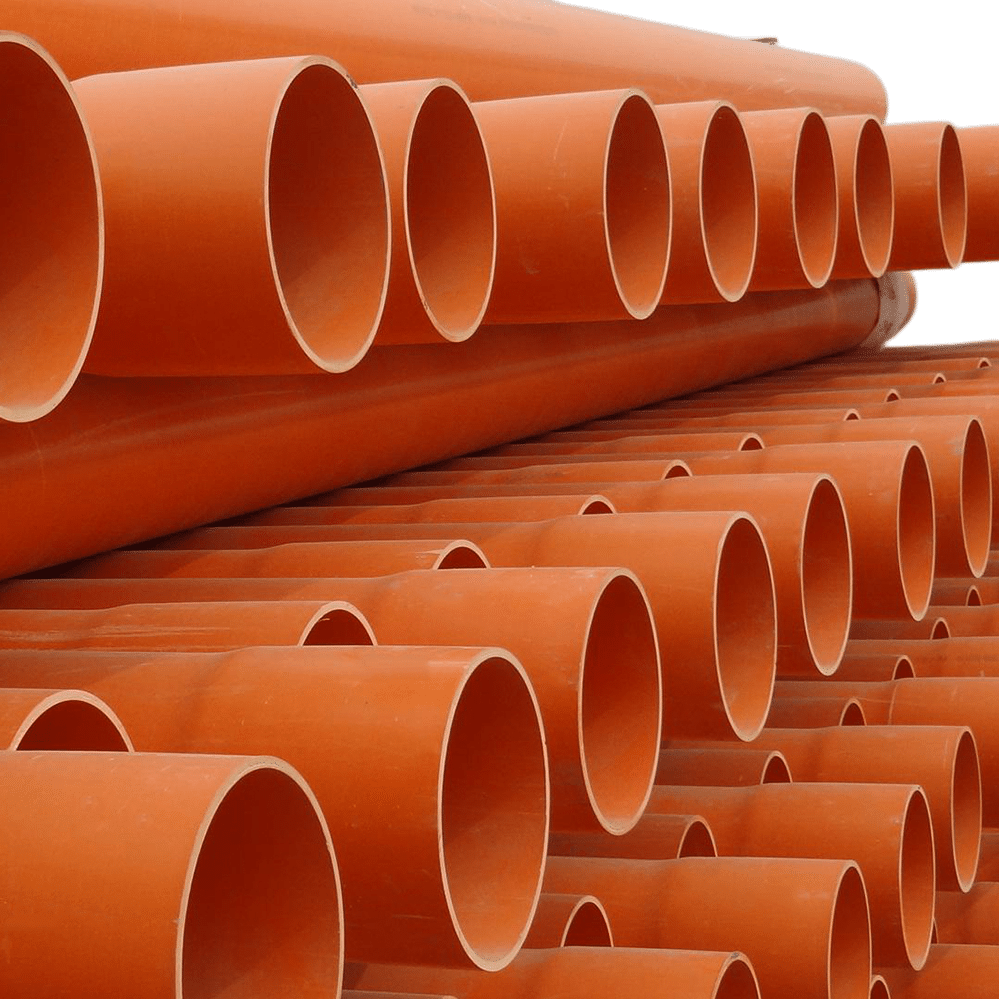
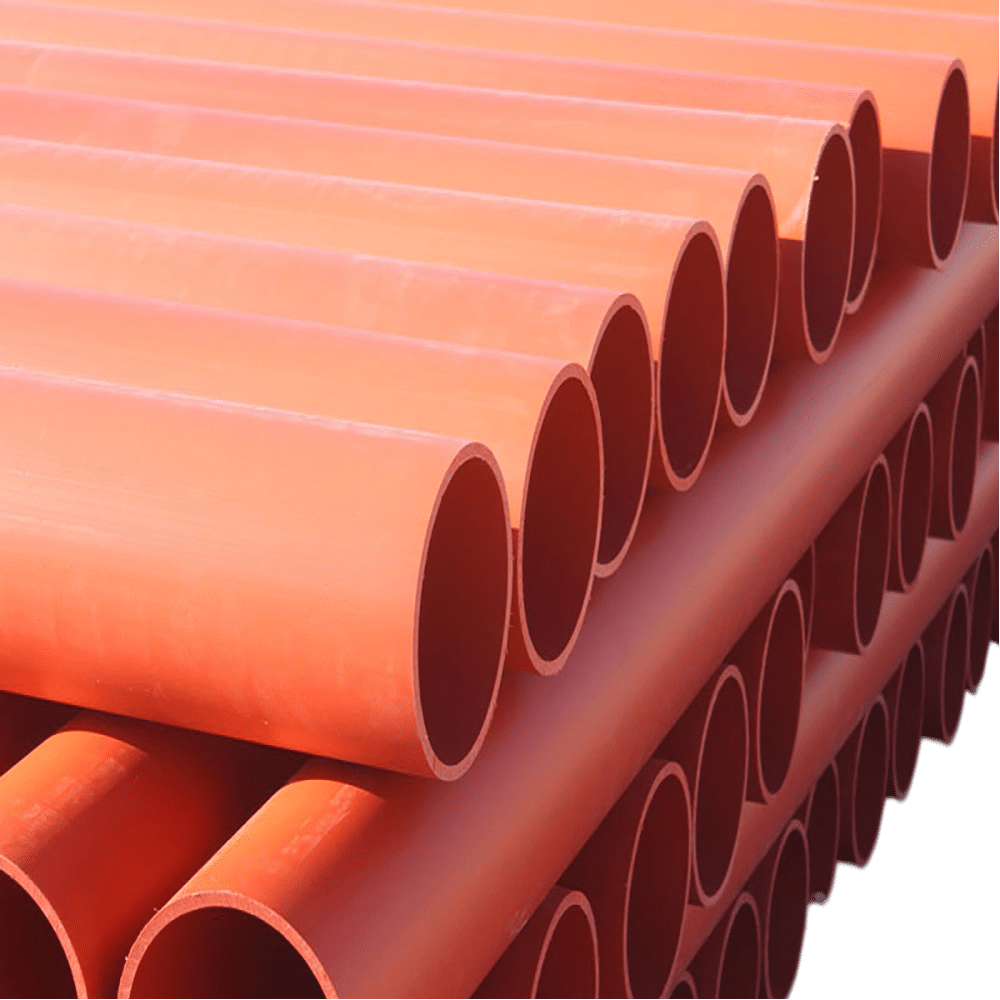
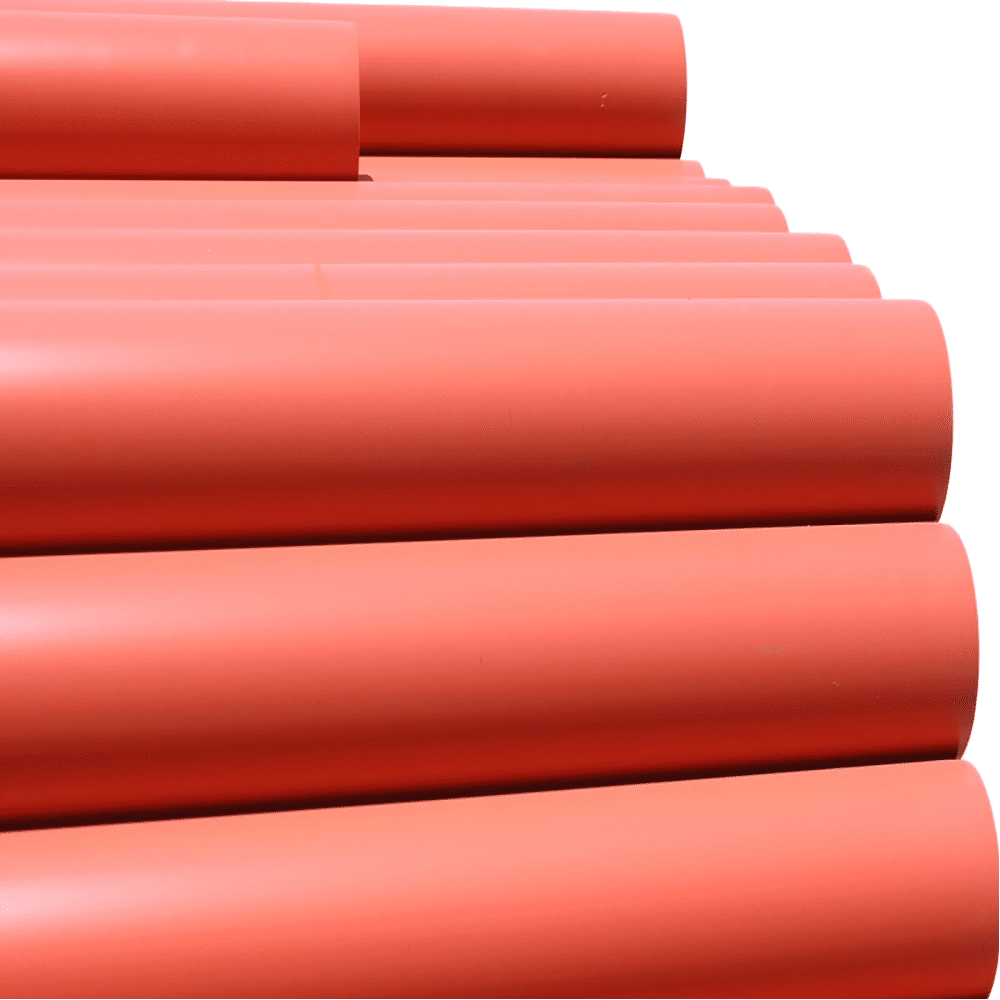
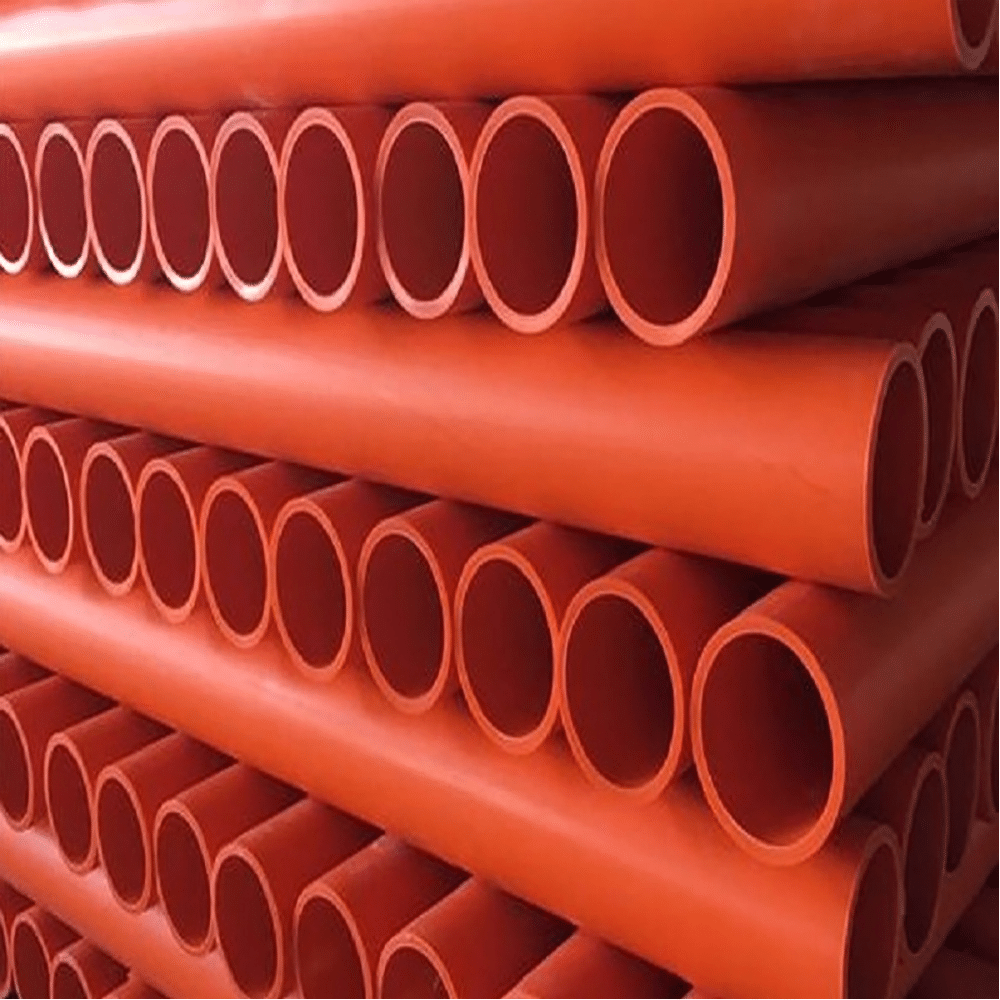
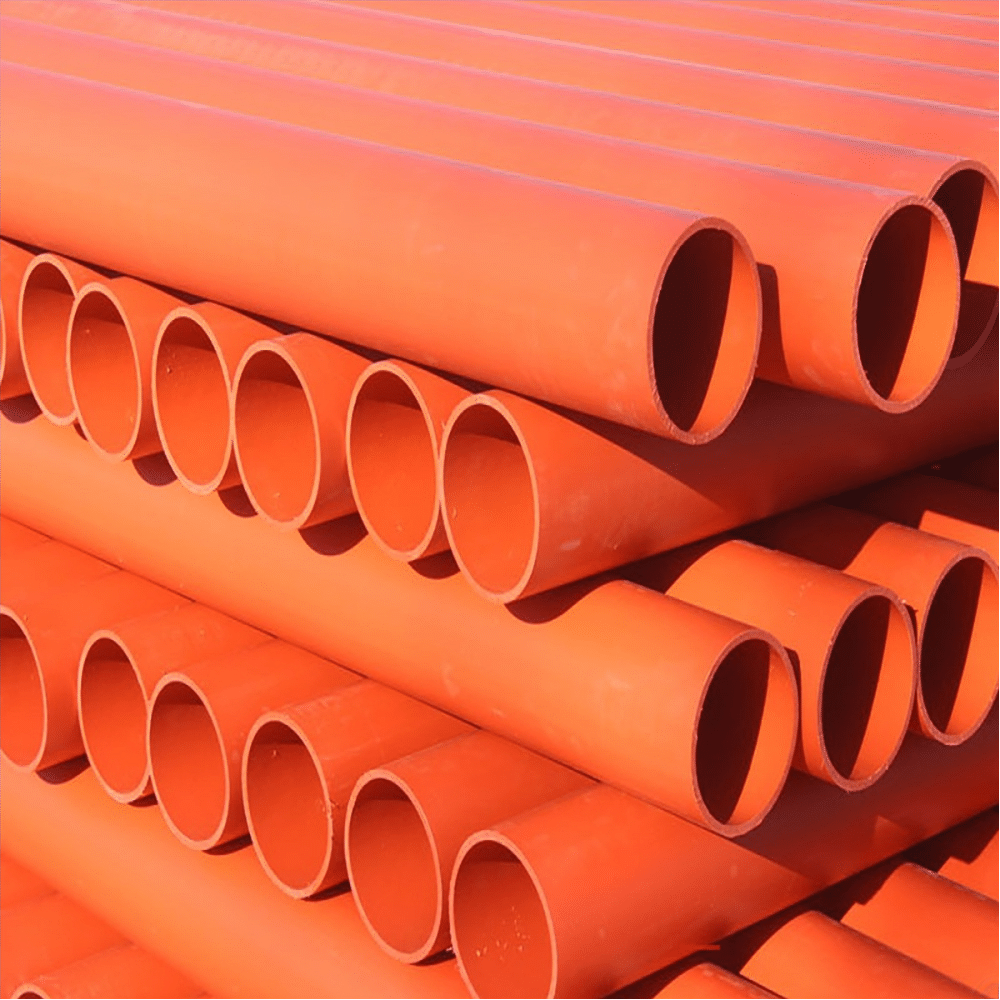
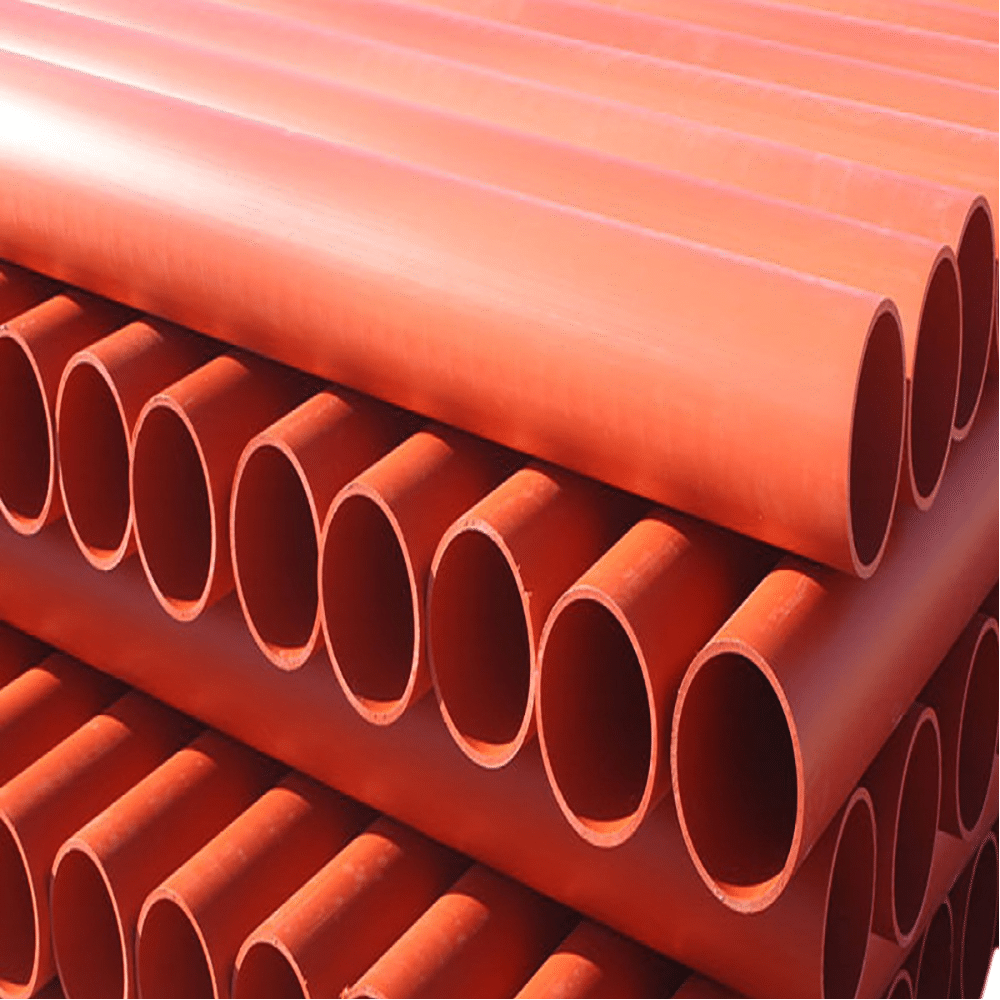
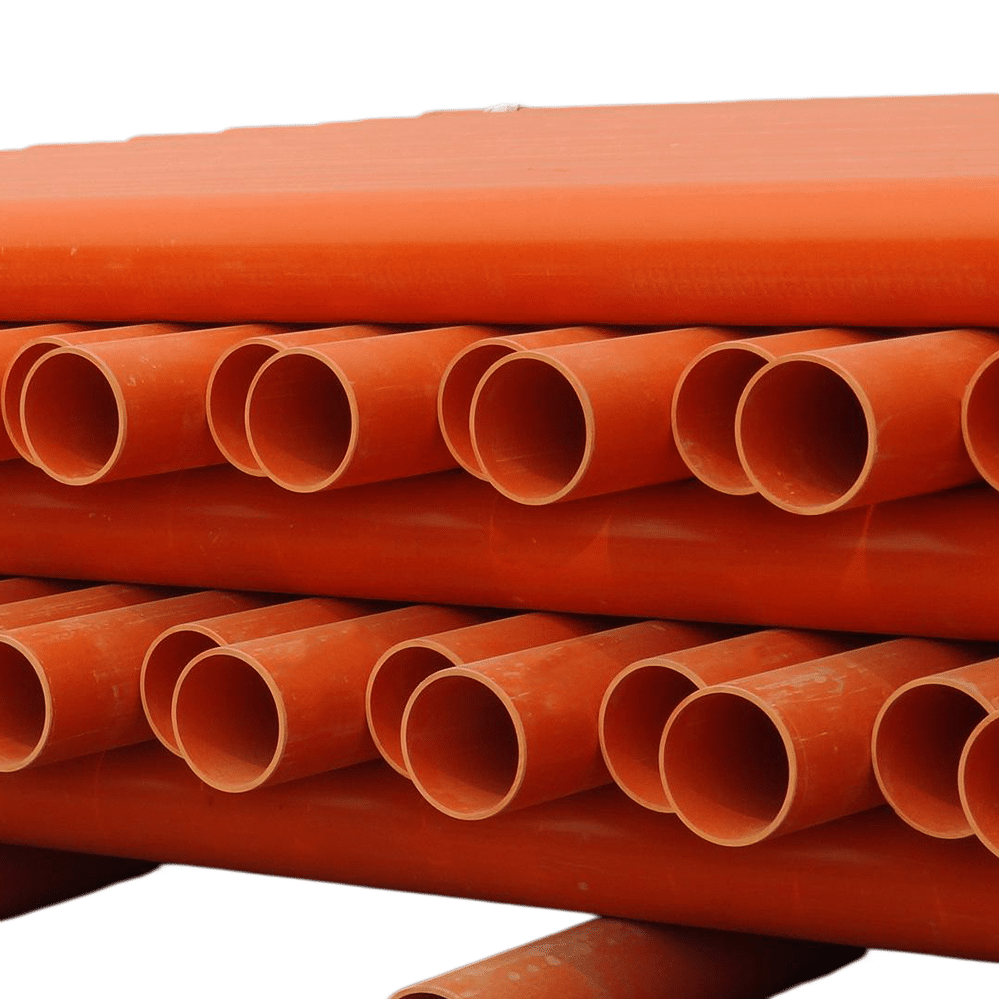

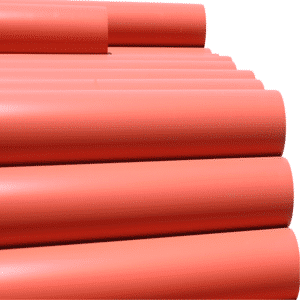
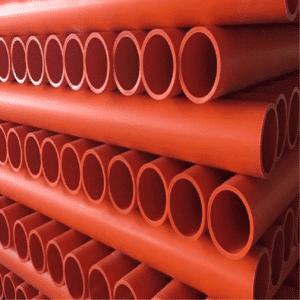
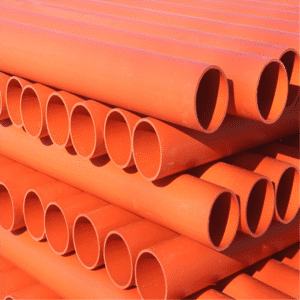
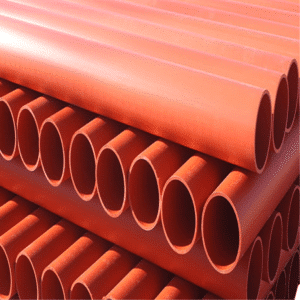
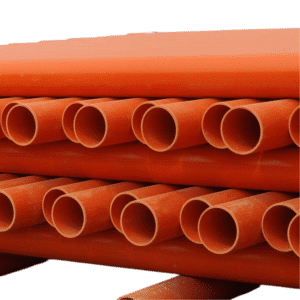
Cable Protection Pipes are designed to provide reliable physical protection for power and communication cables during installation and long-term operation. They prevent mechanical damage, corrosion, moisture intrusion, and environmental impact while guiding cables in an orderly layout, ensuring safety, stability, and ease of maintenance in power and communication transmission systems.
Common Terminology
Cable Protection Pipe is widely used in engineering projects.
Cable Conduit is commonly adopted in international standards and technical documents, emphasizing cable routing channels.
Cable Protection Tube is often used in product specifications and daily communication with clear and direct meaning.
Material Options
Metal Types
Hot-dip galvanized carbon steel and stainless steel (304 / 316L) offer high mechanical strength and impact resistance, suitable for underground direct burial, tunnels, and heavy-load environments.
Plastic Types
PVC, PE, and MPP pipes feature excellent corrosion resistance, lightweight structure, and easy installation, ideal for indoor applications, non-heavy-load areas, and corrosive environments.
Composite Types
Steel-plastic composite pipes combine metal strength with plastic corrosion resistance, suitable for complex conditions such as coastal or saline underground environments.
Structural Types
Solid Wall Pipes
Standard solid structure suitable for most conventional applications.
Corrugated Pipes
Flexible corrugated walls provide enhanced deformation resistance, suitable for settlement-prone underground areas.
Threading Conduits
Thin-wall design optimized for easy cable pulling, commonly used for indoor and low-voltage cable installations.
Application Areas
Underground Installation
Used for power and communication cables beneath roads, green belts, and urban infrastructure, requiring high compressive strength and corrosion resistance.
Building Structures
Applied for cable routing through walls and floor slabs, with flame-retardant requirements for indoor and fire-protection systems.
Tunnels and Utility Corridors
Widely used in metro systems and integrated utility corridors, working together with cable brackets and embedded channels.
Outdoor Exposure
Installed on bridges or between utility poles, requiring strong weather and UV resistance.
Corrosive Environments
Suitable for chemical parks and coastal areas, where stainless steel or PE/MPP pipes are preferred.
Key Performance Requirements
Mechanical Strength
Impact resistance ≥12 kJ/m²; compressive strength ≥20 MPa for metal pipes and ≥10 MPa for plastic pipes, ensuring resistance to external pressure and impact.
Corrosion Resistance
Hot-dip galvanized pipes achieve salt spray resistance of ≥1000 hours, while stainless steel pipes reach ≥5000 hours; plastic pipes provide excellent acid and alkali resistance.
Flame Retardancy
Indoor applications require B1 flame-retardant grade, while fire protection cable systems require non-combustible Class A performance.
Size Range
Standard diameters range from 20 mm to 200 mm, with at least 30% spare space reserved for cable installation and maintenance.
Installation Compatibility
Plastic pipes offer good flexibility, while metal pipes allow easy cutting and secure connection, with watertight and dustproof joints.
| Technical Parameter Comparison Table of Cable Protection Pipes | |||||
| Parameter Category | CPVC Cable Protection Pipe | MPP Cable Protection Pipe | HDPE Cable Protection Pipe | Steel Cable Protection Pipe | Concrete Cable Protection Pipe |
| Temperature Resistance | Long-term: 90–100℃; Short-term: 120℃ | Long-term: 70–95℃; Short-term: 110℃ | Long-term: -40–60℃; Short-term: 80℃ | Long-term: -20–200℃ (depending on coating) | Long-term: -30–80℃ |
| Pressure Bearing Capacity | Working pressure: ≥1.0MPa | Working pressure: ≥0.8MPa | Working pressure: ≥0.6MPa | Working pressure: ≥2.5MPa (seamless steel) | Working pressure: ≥1.5MPa |
| Corrosion Resistance | Excellent (resists acids, alkalis, salts) | Good (resists soil corrosion) | Excellent (chemical resistance) | General (requires galvanizing/plastic spraying) | Good (resists soil/atmospheric erosion) |
| Installation Method | Socket connection, solvent welding | Hot-melt welding, socket fusion | Hot-melt welding, electrofusion | Welding, flange connection | Socket connection, concrete pouring |
| Key Advantages | High temperature resistance, strong corrosion resistance | Good toughness, suitable for non-excavation | Lightweight, flexible, low cost | High strength, impact resistance | Stable structure, long service life |
| Typical Application Scenarios | High-temperature/chemical areas, indoor/outdoor laying | Horizontal directional drilling, high-volttage cables | Direct burial, wet environments, communication cables | Heavy-load scenarios, harsh outdoor/industrial areas | Large-scale power projects, tunnels, long-distance cable laying |